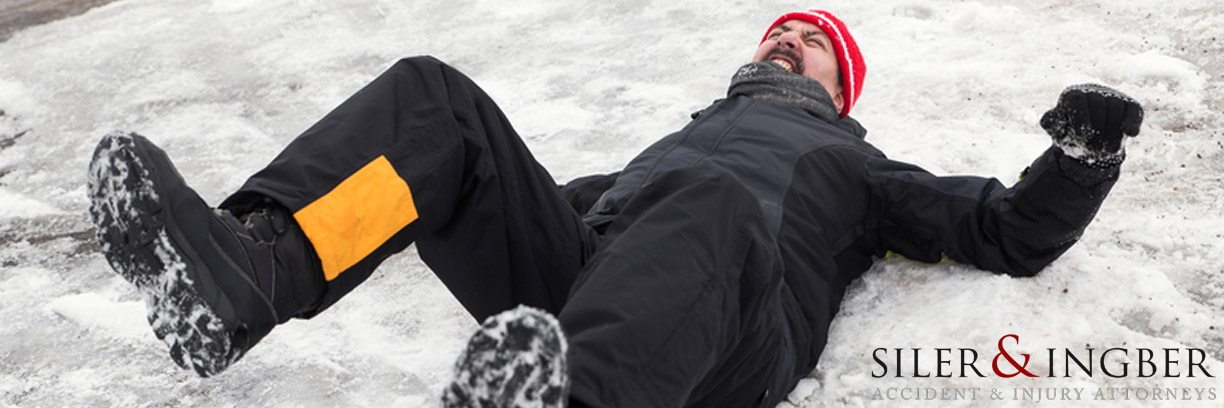
Slips, trips, and falls are among the leading causes of injuries and emergency room visits in the United States. While these incidents can happen at any time of year, winter weather significantly increases both their frequency and severity. Snow, ice, freezing rain, and wet indoor conditions create hazardous walking surfaces that are often difficult to detect until it is too late. According to the Centers for Disease Control and Prevention (CDC), approximately 1 million American adults are injured each year from slips and falls, with injury rates rising sharply during the winter months as temperatures drop.
Understanding the causes of winter slips, trips, and falls, and how to prevent them, is essential for protecting yourself, your employees, and the public. Additionally, when injuries occur due to unaddressed hazards on someone else’s property, it is necessary to understand your legal rights and potential options for compensation.
What Are Winter Slips, Trips, and Falls?
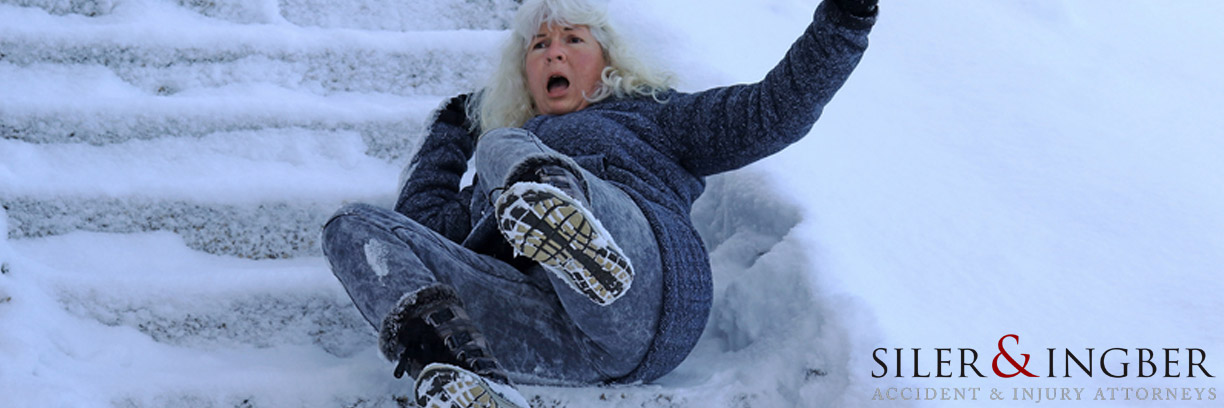
A slip occurs when there is too little traction between footwear and the walking surface, often due to ice, snow, or water. A trip happens when a person’s foot strikes an object or uneven surface, causing a loss of balance. Falls are frequently the result of slips or trips and can lead to serious injuries such as fractures, head trauma, back injuries, and soft tissue damage.
Winter weather intensifies these risks by introducing ice, snow accumulation, snowmelt, and reduced visibility. Surfaces that appear safe may be deceptively slick, particularly when black ice is present. Indoors, melting snow tracked in from outside can create wet, slippery floors, especially near building entrances.
Why Winter Conditions Increase Fall Risks
Cold, wet weather exacerbates existing hazards and introduces new ones in both public and workplace environments. During winter, even well-maintained areas can become dangerous quickly if snow and ice are not promptly addressed.
Common contributors to winter slips, trips, and falls include:
- Snow and ice accumulation on sidewalks, parking lots, and entryways
- Snowmelt from wet footwear creates slippery indoor floors
- Ice formed from poor drainage or refreezing meltwater
- Snow covering curbs, steps, and other elevation changes
- Reduced traction due to freezing temperatures
- Employees and pedestrians rushing to escape the cold
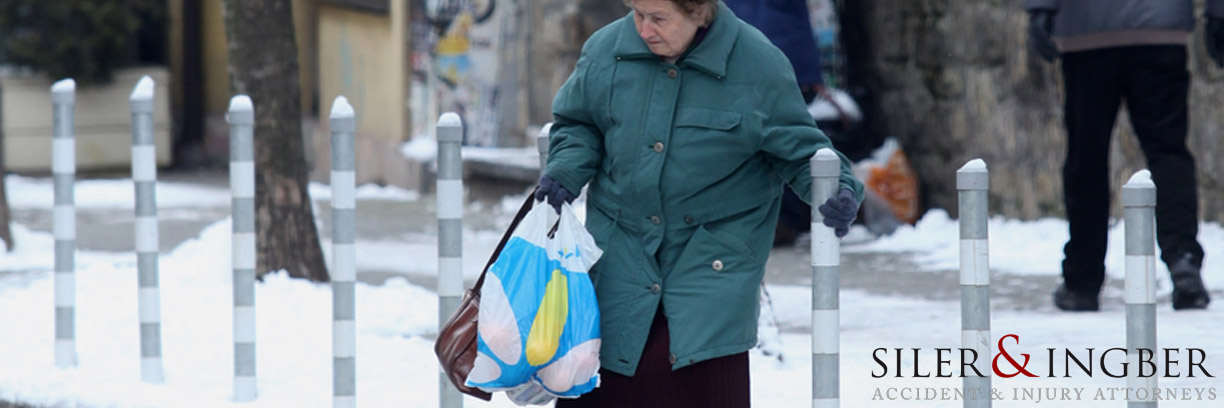
In workplaces, routine hazards such as spills or uneven flooring become more dangerous when combined with winter moisture. Puddles may persist throughout the season, and entrances often become high-risk areas due to constant foot traffic and wet conditions.
Common Winter Hazards That Lead to Injury
Certain conditions consistently contribute to winter slip, trip, and fall injuries, particularly when property owners or employers fail to take reasonable precautions. Examples include:
- Unsecured or curled floor mats that easily cause trips
- Wet mats or slick flooring near entrances
- Ice and snow on sidewalks, including ice caused by landscape drainage
- Uneven curbs or sidewalks resulting from concrete upheaval
- Snow-covered curbs that obscure elevation changes
- Divots, dips, or depressions in parking lots
- Snow compacted between parked vehicles becomes icy
These hazards can exist in commercial properties, residential areas, parking facilities, and workplaces. When they are not adequately addressed, they create conditions that significantly increase the likelihood of serious injury.
Practical Tips for Preventing Winter Slips, Trips, and Falls
While winter hazards cannot be eliminated, many injuries can be prevented through planning, awareness, and proper equipment.
Planning and Awareness
- Allow extra time: Avoid rushing by planning additional time to reach your destination.
- Stick to cleared paths: Walk only on designated, well-maintained walkways and avoid shortcuts.
- Test surfaces: Lightly tap potentially slippery areas with your foot before stepping fully onto them.
- Be cautious entering and exiting vehicles: Swing both feet out, plant them firmly, and stand up slowly.
Footwear and Gear
- Wear traction-soled footwear: Choose boots with deep, rubber treads and avoid smooth soles or high heels.
- Add traction aids: Slip-on ice cleats or spikes can provide additional grip in extreme conditions.
- Dress appropriately: Wearing layers can offer some padding in the event of a fall, and gloves help keep hands free for balance.
Safe Walking Techniques
- Take small, shuffling steps, often referred to as the “penguin walk.”
- Keep your hands out of your pockets to maintain balance.
- Use handrails whenever available.
- Stay alert and watch for black ice, particularly in shaded areas.
Inside buildings, take extra care near entrances. Wipe your feet thoroughly and proceed cautiously on wet or slick flooring.
Keeping Employees Safe During Winter
Employers have a responsibility to maintain a reasonably safe environment for employees and visitors. Winter safety planning should be proactive and ongoing throughout the season.
Effective strategies include:
- Regular snow and ice removal from walkways and parking areas
- Prompt placement of warning signs and floor mats at entrances
- Securing mats to prevent shifting or curling
- Repairing uneven pavement, curbs, and flooring
- Ensuring proper drainage to avoid refreezing
- Encouraging employees to wear appropriate winter footwear
Clear policies, employee training, and routine inspections can significantly reduce the risk of winter-related injuries and potential liability.
Legal Rights After a Winter Slip and Fall Injury
Despite best efforts, accidents still happen. If you are injured after slipping on ice or snow that was not correctly removed or addressed, you may have legal rights. Property owners, employers, and managers have a duty to take reasonable steps to maintain safe conditions. When they fail to do so, and someone is injured as a result, they may be held liable.
A slip and fall injury caused by another party’s negligence may entitle you to pursue compensation for medical expenses, lost wages, pain and suffering, and other damages. Each case depends on specific facts, including how long the hazard existed and whether reasonable maintenance efforts were made.
Winter slips, trips, and falls are a serious and preventable cause of injury. Snow, ice, and wet conditions create hazards that demand heightened awareness, proper preparation, and responsible property maintenance. By understanding common risks, implementing practical safety measures, and knowing your rights, you can reduce the likelihood of injury and protect yourself, your employees, and others throughout the winter season.
When prevention fails and injuries result from negligence, understanding your legal options is a critical step toward recovery and accountability.
Siler & Ingber Accident & Injury Attorneys
The Law Firm You Can Trust When It Matters Most
 Offices: 301 Mineola Blvd., Mineola, NY 11501
 Phone: (516) 294-2666
 Website: https://www.nylawnet.com/
 Email: ringber@nylawnet.com
Serving clients across New York City and Long Island. No fee unless we win your case.