

As the winter months start to fade and warmer temperatures arrive, construction activity across New York City and Long Island begins to ramp up. From road repairs and building renovations to major infrastructure projects, spring is one of the busiest seasons for construction crews, and while this surge in activity helps keep the region growing and improving, it also leads to an increase in construction-related accidents.
Busy job sites, heavy equipment, and tight urban spaces already create risks for workers and pedestrians alike. Add in changing weather conditions, increased traffic, and overlapping construction projects, and it’s easy to see why accidents tend to spike during the spring months. Understanding the most common hazards and what to do in the event of an accident can help both workers and members of the public stay safer during this active season.
Why spring is a high-risk season for construction accidents
The shift from winter to spring creates unique challenges on construction sites, and after months of freezing temperatures and snow, many projects that were delayed during winter suddenly begin at the same time. This means contractors often rush to make up for lost time, seeing schedules become compressed and multiple teams having to work in the same area.
It’s also common for roadways across NYC and Long Island to need repair after the winter months, particularly due to potholes, cracked pavements, and worn infrastructure. This usually means more roadwork zones and lane closures, seeing workers needing to operate in close proximity to moving vehicles and drivers navigating unfamiliar traffic patterns.
Weather conditions can also play a role, with early spring days bringing rain, fluctuating temperatures, and lingering ice or mud. These conditions can create slippery surfaces, unstable footing, and reduced visibility, increasing the likelihood of slips, falls, and equipment mishaps.
Common construction site hazards in the spring
Construction sites always involve risk, but certain dangers become more prominent during the spring season, and one of the most common hazards is unstable ground conditions. Melting snow and frequent rain can soften soil and create muddy areas that affect equipment stability, making excavations and trenches more vulnerable to collapse if water accumulates in the soil.
Another major concern involves falls from heights, as roofing projects, scaffolding installations, and exterior repairs often begin in the spring as temperatures become more manageable. Workers operating on ladders, scaffolds, or elevated platforms face significant fall risks, particularly when surfaces are wet so they will need to take extra care.
Heavy equipment accidents also increase when job sites become more crowded. Bulldozers, cranes, forklifts, and dump trucks frequently operate in tight spaces, sometimes with multiple contractors working simultaneously, and limited visibility and rushed schedules can lead to collisions or struck-by accidents.
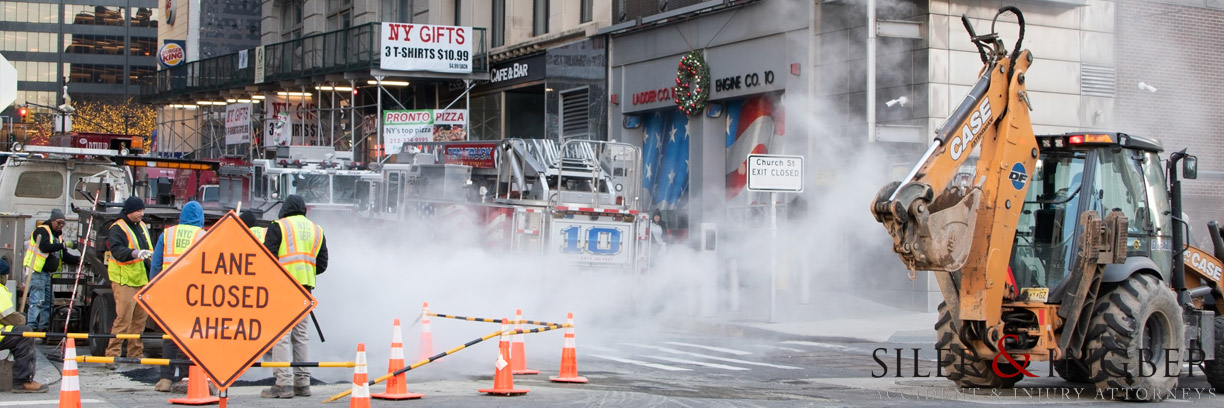
Construction accidents don’t only affect workers, though. In densely populated areas like New York City, construction zones often sit directly beside sidewalks, storefronts, and busy streets, exposing pedestrians, cyclists, and drivers to hazards. Debris falling from scaffolding, improperly secured materials, or tools dropped from heights can cause serious injuries, while sidewalk closures and detours sometimes force pedestrians closer to traffic or into unfamiliar walking paths.
Common injuries in construction accidents
Construction-related accidents can lead to a wide range of injuries, some of which have lasting effects. Falls from heights frequently result in fractures, spinal injuries, or traumatic brain injuries, and workers struck by falling materials or moving equipment may suffer crush injuries or severe internal trauma. Electrocution incidents can cause burns, nerve damage, or cardiac complications, while slip-and-fall accidents on wet or uneven surfaces often lead to sprains, broken bones, and head injuries.
For pedestrians or drivers involved in construction zone incidents, injuries may resemble those seen in vehicle accidents, including whiplash, broken limbs, and concussions. Whatever the injury might be, recovery from these injuries can take weeks, months, or even years, and in more serious cases, victims may face permanent disabilities that affect their ability to work and carry out everyday activities.
What to do if you’ve been involved in a construction accident
If you have been involved in a construction accident in New York or Long Island, then it is important to know what to do next. First and foremost, medical attention should be the main priority, and even injuries that seem minor should be evaluated by a healthcare professional, as some conditions, including head injuries and internal trauma, may not show symptoms immediately.
If possible, document the scene as best as you can by taking photos of the area, the equipment involved, warning signs (or lack thereof), and surrounding conditions, which can preserve important evidence. Witness contact information may also prove valuable later, while workers should report the incident to supervisors or site managers as soon as possible to create an official report.
For accidents involving pedestrians or drivers, notifying local authorities and filing a report can help establish a clear record of what happened.
Understanding liability in construction accidents
Construction sites typically involve several companies working together on the same project. While workers’ compensation may cover certain injuries for employees, other forms of liability may apply depending on the circumstances. For example, if a subcontractor fails to follow safety procedures or a property owner neglects hazardous conditions, additional claims may be possible. Equipment defects, unsafe scaffolding, or poorly maintained work zones may also create legal responsibility for specific parties.
In situations where pedestrians or motorists are injured due to unsafe construction conditions, property owners, contractors, or project managers may be held accountable if negligence played a role.
Because each accident is unique, determining liability often requires a detailed review of the job site, safety practices, and contracts between companies.
Get the help you need after a construction injury
Construction accidents can quickly become complicated, especially when injuries are serious or multiple parties are involved. Understanding your options early can make a significant difference in medical coverage, lost wages, and long-term financial recovery.
Our attorneys here at Siler & Ingber Accident & Injury Attorneys can assist individuals throughout New York City and Long Island who have been injured in workplace and construction-related accidents. Our experienced team works with injured workers, pedestrians, and drivers to evaluate the circumstances of your accident and pursue compensation where appropriate. If you want to learn more about how we can help you, get in touch today for your free consultation!
Siler & Ingber Accident & Injury Attorneys
The Law Firm You Can Trust When It Matters Most
 Offices: 301 Mineola Blvd., Mineola, NY 11501
 Phone: (516) 294-2666
 Website: https://www.nylawnet.com/
 Email: ringber@nylawnet.com
Serving clients across New York City and Long Island. No fee unless we win your case.